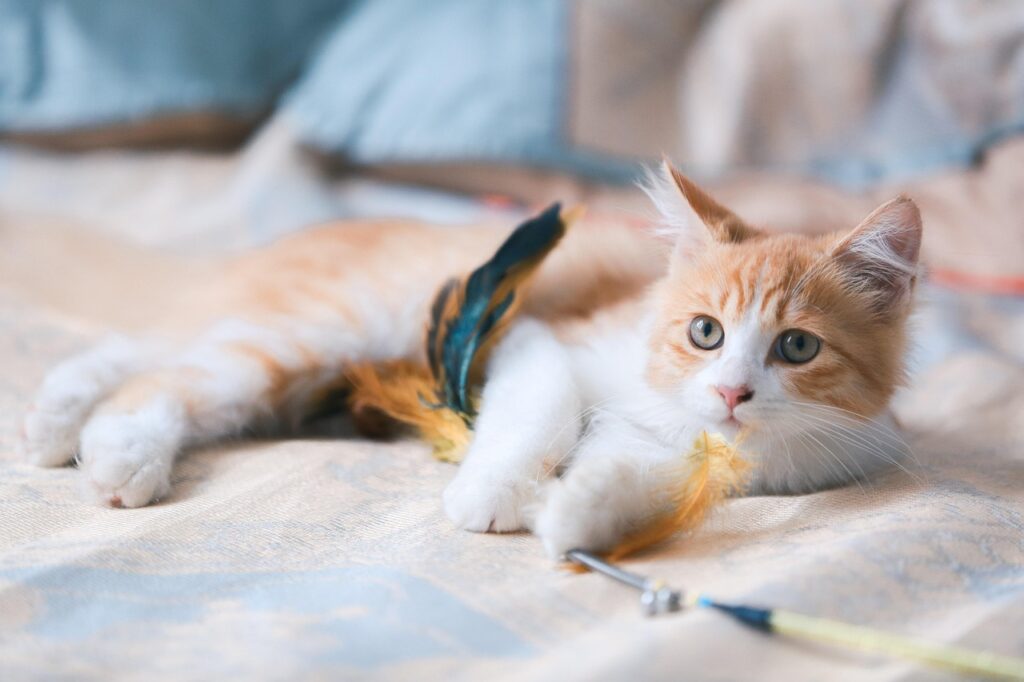
Welcome home, little whiskers! Bringing a kitten into your family is exciting—and a responsibility we’re honoured to help you with. At Brentwood Animal Hospital in Burnaby, we keep visits calm and positive, and tailor timing and care to your kitten’s lifestyle and needs. Because one size does not fit all, we will personalise timing and treatments after we examine your kitten and discuss options that align with your situation, priorities and budget.
At-a-Glance Schedule
A simple series to build strong immunity. If your kitten is starting late or has missed a dose, we’ll tailor a catch-up plan by age.
- 8 weeks:
FVRCP #1 (feline herpesvirus/rhinotracheitis, calicivirus, panleukopenia)
• Deworming & flea/tick prevention
• Fresh stool sample test available for screening - 12 weeks:
FVRCP #2
• Feline Leukemia (FeLV) #1
• Deworming & flea/tick prevention
• Fresh stool sample or follow-up test available to check efficacy - 16 weeks:
FVRCP #3 (final kitten booster; sometimes given at 18–20 weeks based on risk)
• FeLV #2
• Rabies
• Deworming & flea/tick prevention available - 5–6 months:
Spay/Neuter (add a microchip if not already placed) - 12 months after 16-week visit:
FVRCP booster (1-year)
• Rabies booster (as applicable)
• FeLV booster for at-risk cats
Notes:
- If you’re starting late, we’ll design an age-based catch-up plan.
- Ask about split-visit vaccine appointments for additional safety or if your kitten has a history of vaccine sensitivity.
- Rabies is a core vaccine like FVRCP. FeLV vaccine is also very important for protecting young kittens.
- FeLV/FIV testing: We may test at intake (and before/around the FeLV series when practical); retest about 60 days after any possible exposure.
- Want to save on preventive care? Ask about our Kitten Wellness Bundle—payment-plan options available.
Parasites: What to Know
Intestinal parasites (roundworms, hookworms, tapeworms, coccidia) are common in kittens. Signs can include diarrhea, vomiting, a pot-bellied look, and poor growth. Kittens can pick them up from their mother (before/after birth), the environment, fleas, or prey.
Can parasites affect people? In rare cases, yes. Good hygiene, regular deworming, and prompt litter clean-up help protect the whole family.
Deworming & Stool Sample Checks
- Deworming plan: Every 2 weeks until ~12 weeks, then monthly until ~6 months (we can adjust if needed). For adult cats: indoor—yearly fecal; outdoor/hunters—every 1-3 months or fecal every 3 months + targeted deworming.
- Why stool tests? They find parasites even when no signs are present and confirm that treatment worked.
- First-year fecals: Plan 2-4 tests (intake, after deworming, and again by 6–12 months).
- Fleas & tapeworms: Consistent flea control helps prevent tapeworm infections.
Heartworm Advisory (Travel-Related)
Heartworm risk varies by region. If your kitten came from or you plan to travel to a heartworm-endemic area, ask us about testing and monthly prevention—we’ll tailor timing to your itinerary.
Home Hygiene Tips
- Scoop litter daily
- Wash hands after handling litter or soil
- Keep play areas clean
- Pregnant people should avoid litter box duty
Grooming Basics (Low-Stress)
- Baths: Not usually needed for most kittens—but helpful for long-haired ones. Use kitten-safe shampoo; keep water away from ears/eyes; keep first baths brief and positive.
- Brushing: Short sessions build trust, affection and prevent mats.
- Ears: Check weekly; clean only with vet-approved products.
- Nails: Trim small amounts often; reward calmly.
- Teeth: Start early with cat-safe toothpaste and a soft brush or finger brush.
Spay/Neuter: Why & When
- Helps prevent roaming, spraying, fighting, heat cycles, and certain reproductive diseases.
- We offer pre-anaesthetic bloodwork to identify hidden issues early and improve safety and recovery.
- Recommended at 6–8 months (we may advise earlier or later in specific cases).
- Consider microchipping at the same visit.
- Home care: Pain control as prescribed, e-collar if needed, activity restriction for 10–14 days. Monitor the incision; call if you see swelling, discharge, foul odour, or if your kitten won’t eat.
Nutrition & Feeding
- Wet + dry balance: Cats have low thirst drive; including wet (canned) food supports hydration and urinary health. Offer balanced and measured portions of dry food to complement wet meals.
- Starting point: Aim for ≥50% high-quality canned kitten food; feed kitten-specific diets until 9–12 months.
- How to feed: Small, frequent meals for growing kittens; introduce new foods gradually over 7–10 days. Provide fresh water—skip cow’s milk.
- Treats: Use sparingly; ideally ≤10% of daily calories. Count treats in the total portion.
- Feeding targets: We’ll help you set daily calories and track body condition (BCS) at each visit.
- Slow feeders: Consider puzzle feeders or timed feeders for mental enrichment.
Bringing Your Kitten Home
- Start in one quiet room with litter, water, food, bed, and toys.
- Let curiosity lead—open the carrier and allow voluntary exploration.
- Expand their world room-by-room over several days.
- Sit nearby, speak softly, and let them choose when to interact.
Introducing Your Kitten to Dogs, Cats & Children
- Start with scent swaps: Exchange blankets/towels and feed on opposite sides of a closed door.
- First looks: Use a gate or carrier; keep dogs leashed. Short, calm 3–5-minute sessions.
- Watch body language: Pause if stress signs appear.
- Go slow: Gradually allow supervised room sharing; provide vertical spaces for cats; separate resources (beds, litter, food/water).
- With children: Always supervise; teach gentle petting; quiet voices.
Never force interactions. Short, positive sessions beat long stressful ones. If tension persists, contact us for a tailored plan.
Kitten Gentling (Cooperative Care)
- 30–60-second sessions 1–2×/day: gently touch ears, gums, paws, tail, collar/harness → treat.
- Touch → treat; stop before the kitten pulls away.
- Practice exam-positions: chin-rest, stand, side-lie.
- Carrier = safe den: Keep out at home; add treats; use pheromone spray before travel.
- Introduce surfaces/sounds calmly.
Goal: A kitten who opts-in to handling.
Signs to pause: flattened ears, tail swish, crouching, growl/hiss, swat.
Play, Enrichment & Safety
- Predatory play: wands, toy mice, crinkle balls, lasers (always end with a catch). Remove broken toys immediately.
- Avoid unsupervised string/ribbon—foreign-body risk.
- Climbing & scratching: Provide cat trees, vertical and horizontal scratchers.
- Never use hands/feet as toys.
- Daily social play builds confidence.
⚠️ Foreign-Body (FB) Ingestion — Prevent & Act
Avoid: string/yarn/ribbon, hair ties, elastics, tinsel, thread/needles, small toy parts, rubber bands.
Watch for: repeated vomiting, drooling, pawing at mouth, loss of appetite, lethargy, painful belly, hiding.
Do not pull visible string; call immediately. Do not induce vomiting unless advised.
Holiday & Household Hazards
Lilies, essential oils/diffusers, human pain meds (acetaminophen/ibuprofen/naproxen), onions/garlic, chocolate, xylitol, open-flame candles. When in doubt—keep it out of reach and ask us.
Litter Box Success
- Use one box per cat + one extra.
- Quiet location, away from food/water.
- Litter: unscented, low-dust clumping for kittens ≥12-16 weeks; non-clumping paper for younger/litter-mouthing kittens or homes with respiratory concerns.
- Depth: start at ~2-3 cm (~1 inch).
- Size & access: box length ≥1.5× kitten’s body length; low entry; avoid covered boxes early.
- Scoop daily; wash monthly.
- Training: praise only; move boxes gradually if needed.
Pregnancy Detection (Planned or Accidental)
Pregnancy in cats can be hard to confirm early via physical exam alone.
- Blood test: positive ~25-30 days after mating.
- Ultrasound: assesses pregnancy/viability ~20-25+ days (timing and body condition affect accuracy).
- Radiographs: best for fetal count once skeletons mineralize (≥45 days).
If timing is unknown, we can plan a stepwise timeline (ultrasound ~day 25-30, radiographs ~day 55) and discuss care.
Low-Stress Vet Visits (Cats)
- Use a sturdy top-opening carrier with familiar bedding.
- Leave the carrier out at home; add treats; use pheromone spray ~15–20 minutes pre-travel.
- Practice short car trips; ask about “no-poke” visits.
- Pre-visit meds (gabapentin) available—ask us if your cat is anxious.
- Prefer to wait in your car? Let us know—we’ll escort you to a cat-friendly room.
Family Consistency
- Use consistent cues/rules.
- Supervise children; teach gentle handling.
- Short 5–10-minute training sessions in different rooms to generalize behaviours across the home.
Area & Environment-Specific Health Notes (Burnaby)
- Ear mites: look for head-shaking, scratching, dark debris.
- Upper respiratory disease (URD): sneezing, nasal/eye discharge, reduced appetite—call us.
- Ringworm: patchy hair-loss or crusts; treatable and zoonotic.
- Outdoor/hunting risk: fleas, ticks, rodent exposures—discuss prevention.
Pet Insurance
Pet insurance helps with accidents and illnesses. Review waiting periods, exclusions (including pre-existing conditions), reimbursement %, annual/incident limits, and deductibles. Ask whether claims are direct-pay to the clinic or owner reimbursement, and about pre-approval for major procedures. Examples in Canada: Trupanion • Pets Plus Us • Fetch. We’re happy to discuss what to look for at your first visit. Many families also set aside a small monthly pet-care savings fund for unexpected expenses.
When to Contact Us
Call if you notice: poor appetite, repeated vomiting/diarrhea, sneezing/eye discharge, coughing/trouble breathing, lethargy, pain, or any change that worries you. Trust your instincts—kittens can decline quickly.
We’re here to help every step of the way. Contact Brentwood Animal Hospital, Burnaby, BC to schedule your kitten’s first visit and start on the path to a healthy, confident life together.
📞 Phone: 604-900-8383
📍 Address: 4489 Hastings Street, Burnaby, British Columbia V5C 0L6
Disclaimer: The information provided in this post is for general educational purposes only and does not constitute professional veterinary advice, diagnosis, or treatment. Every pet is unique. Always consult your veterinarian regarding your animal’s specific health condition before taking any action or changing their care routine.